It should be quiet
when one eats an egg...

We are deep in the long slog of the coldest New York winter in eight years. The ice has now created impenetrable snow piles encrusted with frozen dog poop. Seventeen people have already died from the cold. The pain and anger in the world feels relentless. Three different friends are (thankfully, finally) out of the hospital. No one I know is doing well right now so I hope if this includes you, you are gathering as much warmth as you can, taking good care of yourself and others.
In my little corner, that has looked like dog-sitting for a friend (because there is no therapy like pet therapy), reading all about excavators with another friend’s toddler, spooning out plates of hot Chinese food for neighbors on the street, watching this music video on a loop, reading about Minnesota and line dancing with hundreds of people inside the Brooklyn Masonic Temple (get your tickets to the next one Feb. 25!)
If you’re also grieving about the world, Anya Kamenetz’s piece about a third way was a helpful reorientation for me: moving away from obsessing about collapse or just going about life as usual to instead choosing collective action in what Joanna Macy calls the Great Turning, or reducing harm, building resilience and making life more humane right now in the present.
That was heavy on my mind while watching the restored version of A Litany for Survival, the documentary about the great poet Audre Lorde. The two directors were present for a Q&A afterwards, talking about preserving memory to resist erasure. Ada Gay Griffin said that, “as an African-American person, I’m tired of having to imagine everything, things I’ve never seen, things that weren’t documented, trying to flip stuff upside down to imagine what it was like to be Nat Turner or Harriet Tubman. We have to tell our stories, because if we don’t? Who knows where they’ll end up. Nowhere.”
Michelle Parkerson added, “Preservation is survival, because it means your kids or the next generation coming up will have this to see, like the way we saw it the first time it was shown in 1995 at Sundance. This is a political process: preservation as resistance is a driving theme, and this is what Audre’s work is about. This is a part of that litany for survival. You keep the film alive. Crisp. Audible. Meaningful.” They are hoping the film will be include in the Library of Congress, which you can help nominate here.
Mariame Kaba quotes her in her letter to young organizers: “I’m with Audre Lorde, who wrote that ‘despair is a tool of our enemies.’” She expands on the idea of hope in action: “We can live differently. I don’t think we have to live the way we currently do. I think something else is possible.” It could look like anarchy, where free association, self-determination, and mutual aid form the basis of our society:
Preservation shines at the heart of Wesam Hamada’s remembrance of her daughter Hind, murdered two years ago by Israeli forces alongside six of her family members and two paramedics coming to her rescue: “Life in Gaza is not like life anywhere else. My children and I haven’t known what people in other countries might call an ordinary life. We’ve only ever lived on the brink of displacement or death. In our darkest moments, when fear closed in and survival felt impossible, the scent of Hind would calm me.”
Love Heals hosts pop-up clinics for people without health insurance, insisting on caring for everyone. Astra Lincoln writes: “The organization runs a roguish, sting-operation model, setting up temporary clinics across the country, on Indian reservations, in cities with large refugee communities, and for communities living in health care deserts. The treatments are totally free. They collect no patient data beyond first name and received services. And then the whole apparatus vanishes without a trace.”
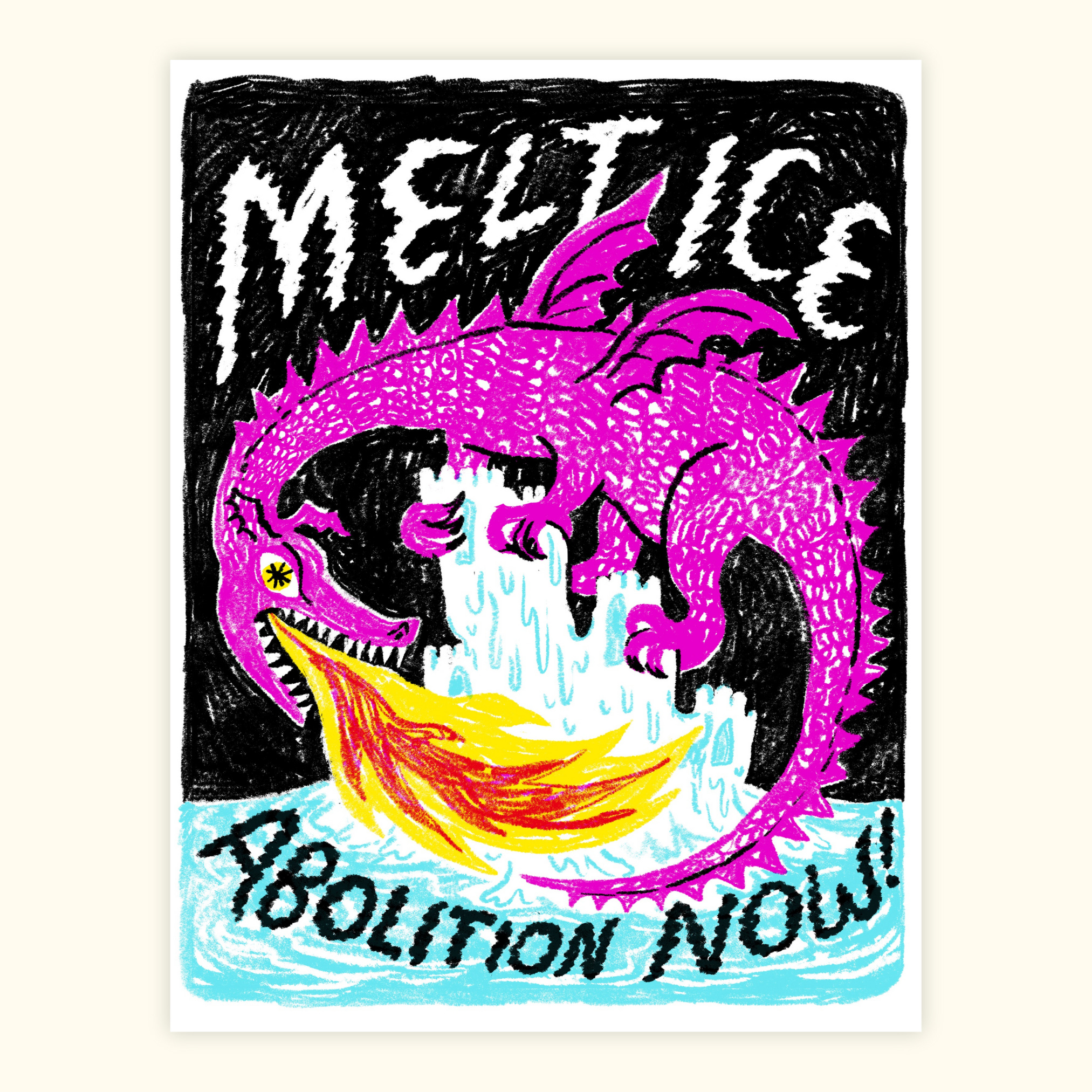
It’s only in knowing the history of what came before us that we can change what lies ahead. ICE didn’t exist officially before 2003, meaning anyone who is 22 years old reading this is older than the agency. From 1800 to 1924, the US basically had open borders, but following World War I and the Spanish Flu (a massive pandemic, sound familiar?), the borders closed for 40 years which contributed to the Great Depression. In 1965 when borders reopened, the US became the global kaleidescope we know today, until 9/11 when ICE was created and immigration moved from a justice issue to one of national security, effectively treating immigrants (or rather future Americans) as if they were enemies.
Now Congress’s budget reconciliation bill has allocated an additional $170 billion for immigration enforcement over four years, making ICE the largest law enforcement agency in the country, as Silky Shah writes, “with a bigger budget than the Bureau of Prisons, FBI, and most militaries in the world. If ICE’s expansion plans are realized, the immigration detention system will triple in size — detaining 120,000-150,000 people at any given time, mirroring the scale of Japanese American internment during WWII.”
The amount of money people will make from this is dizzying. It’s tech companies like Palantir, which NYC Comptroller Mark Levine is calling for an investigation into (on behalf of New York pensioners who have millions of dollars invested in the company). But it’s also “regional, dynastic family businesses and major GOP donors” from aviation to construction to private prisons groups. As John Ganz writes, “Then you add in ICE’s function as an employment program for the Trumpenproletarian mob and all the illiterate influencers and, voila, you have the class composition of actually-existing American fascism, which characteristically enough, is also a racket. It’s the mob from top to bottom.”
Migration is fundamental to life across all species. Dragonflies cross oceans by reading wind patterns, elephants contribute to biodiversity by spreading seeds along their way, monarch butterflies take four generations to complete their migration cycle, salmon die at their final destination, nourishing the rivers that will sustain the next generation… All integral to the planet’s survival.
As Willow Defebaugh writes: “Migration is natural. Only humans criminalize it.” Not to mention divide up the world into imaginary lines but that’s for another letter… In the future, climate change will only accelerate displacement, a natural response to changing conditions.
And create moments of reprieve, like Spain which has just issued a royal-decree that will grant one-year residence and work permits to an estimated 500,000 people already living there. As Prime Minister Pedro Sánchez wrote “We, as Western nations, must choose between becoming closed and impoverished societies, or open and prosperous ones. Growth or retreat: Those are the two options before us. And by growth, I’m not talking only about material gain, but also our spiritual development.”
What a person desires in life
is a properly boiled egg.
This isn’t as easy as it seems.
There must be gas and a stove,
the gas requires pipelines, mastodon drills,
banks that dispense the lozenge of capital.
There must be a pot, the product of mines
and furnaces and factories,
of dim early mornings and night-owl shifts,
of women in kerchiefs and men with
sweat-soaked hair.
Then water, the stuff of clouds and skies
and God knows what causes it to happen.
There seems always too much or too little
of it and more pipelines, meters, pumping
stations, towers, tanks.
And salt-a miracle of the first order,
the ace in any argument for God.
Only God could have imagined from
nothingness the pang of salt.
Political peace too. It should be quiet
when one eats an egg. No political hoodlums
knocking down doors, no lieutenants who are
ticked off at their scheming girlfriends and
take it out on you, no dictators
posing as tribunes.
It should be quiet, so quiet you can hear
the chicken, a creature usually mocked as a type
of fool, a cluck chained to the chore of her body.
Listen, she is there, pecking at a bit of grain
that came from nowhere.
Till next time,
ASK